
Chiptuning
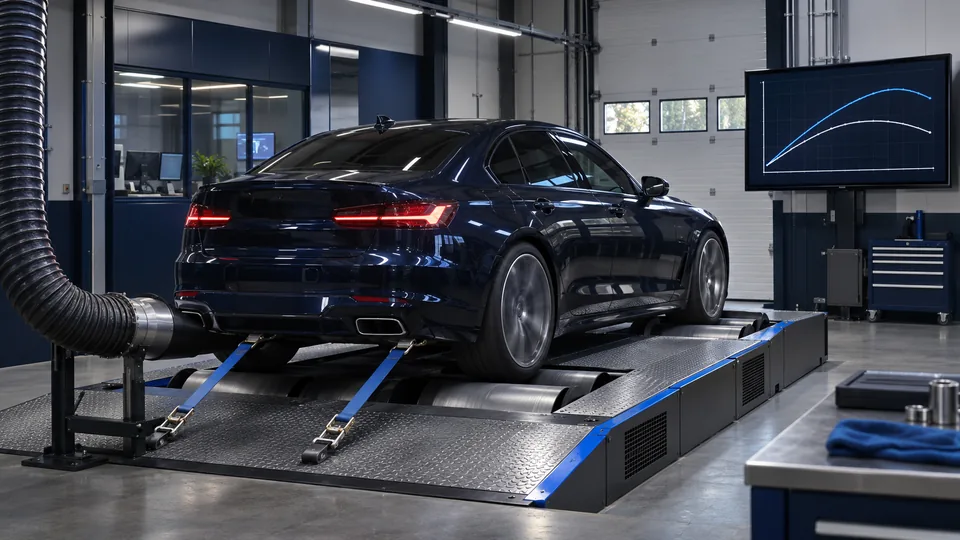
Assessment and calibration of engine management parameters within the applicable technical and regulatory framework. Suitability depends on the vehicle and intended use.
Chiptuning concerns the calibration of electronic engine-management parameters, rather than the addition of a generic device that promises the same result for every vehicle. Before a change is considered, the vehicle configuration, current condition, existing software and intended use need to be understood.
The scope can include an initial assessment, definition of calibration objectives and suitable verification of the resulting behaviour. Mechanical limits, reliability and applicable approval requirements remain part of the decision. No fixed power increase or compatibility is promised without an individual technical assessment.
ECU Remapping
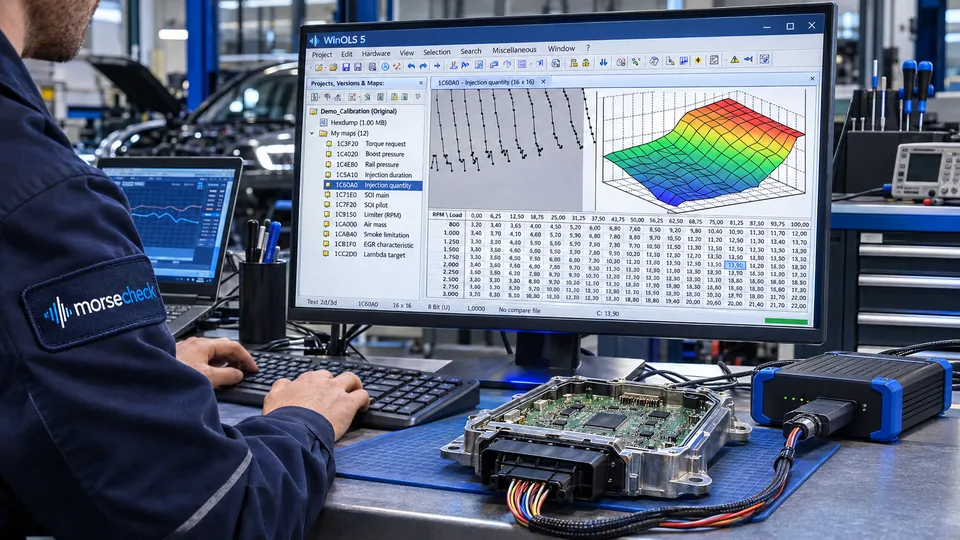
Revision of ECU calibration data for agreed objectives, subject to vehicle compatibility, validation and applicable approval requirements.
ECU remapping changes selected calibration data used by an electronic control unit to manage vehicle functions. In an engine-management context, this means evaluating how relevant control strategies relate to the agreed objective and to the capabilities of the specific hardware and software version.
A responsible project includes identification of the unit, review of the existing condition, appropriate preservation of original data and a validation plan. The available work depends on technical access, compatibility and applicable requirements. Calibration changes are not a substitute for repairing an existing mechanical or electronic fault.
Advanced Diagnostics
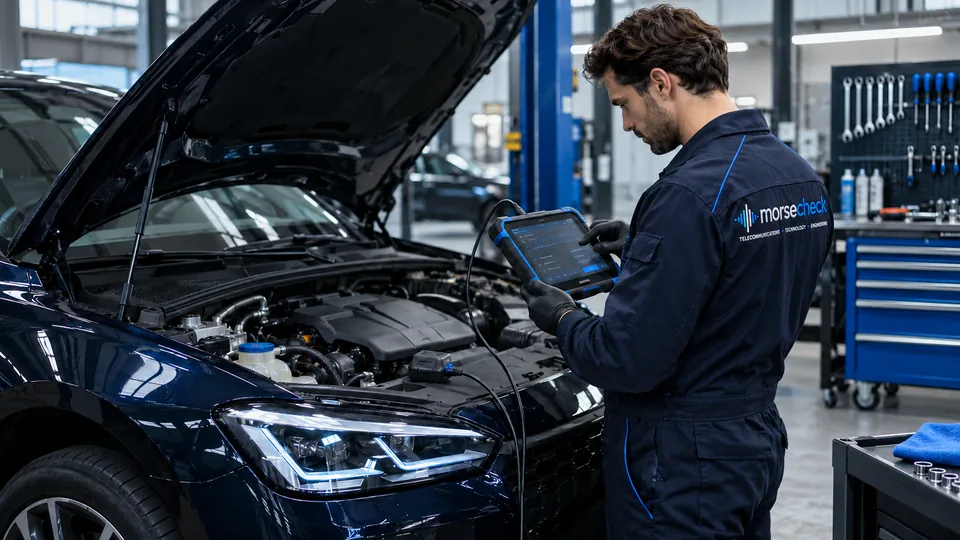
Systematic fault diagnosis using diagnostic data, measurements and component checks to investigate vehicle system behaviour.
Advanced diagnostics goes beyond reading and clearing fault codes. It examines symptoms in context and uses relevant live data, recorded events, measurements and component checks to investigate why a system is not behaving as expected.
The diagnostic process develops and tests possible causes rather than replacing parts solely on the basis of a code. Findings can identify a likely fault, a need for further testing or conditions that prevent a definitive conclusion. Repair recommendations are based on the evidence obtained and the agreed scope.
Vehicle Coding
Configuration of supported vehicle functions and replacement modules, subject to compatibility and manufacturer-specific requirements.
Vehicle coding configures supported options and module settings so electronic systems match the vehicle’s equipment and intended configuration. It may be relevant after replacing a module, retrofitting a compatible component or resolving a configuration mismatch.
The work starts with identifying the vehicle and confirming which functions and combinations are supported. Existing settings are documented where possible, and the affected functions are checked after the change. Coding cannot create hardware capabilities that are absent or make an incompatible module suitable by itself.
ECU Programming
Programming of compatible electronic control units during repair, replacement or configuration work, with the required vehicle-specific checks.
ECU programming involves writing appropriate software or data to a compatible control unit, for example during replacement, repair or an approved software-related intervention. It differs from merely changing a user setting and requires attention to unit identity, software compatibility and programming conditions.
The agreed process can include identification, preparation, data preservation where supported and post-programming checks. Some operations may require manufacturer-specific access or additional procedures. Availability is assessed individually, and a successful programming operation does not remove the need to diagnose underlying faults.
ECU Cloning
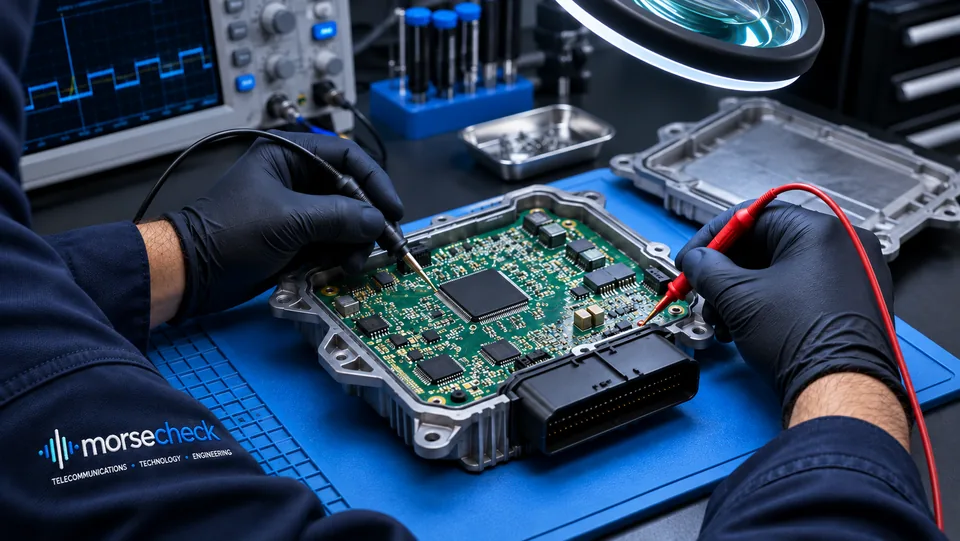
Transfer of compatible control-unit data for legitimate repair or replacement purposes. Authorization and technical compatibility must be confirmed.
ECU cloning is the transfer of compatible control-unit data to a suitable replacement unit for an authorized repair. Its feasibility depends on the unit family, hardware and software versions, data accessibility and the condition of the original unit.
The assessment checks whether the required data can be read and whether the replacement is appropriate. Backup and verification are considered where technically possible. This service is limited to legitimate repair and replacement work and does not imply unrestricted compatibility or the bypass of ownership and security requirements.
ECU Repair
Investigation and repair assessment for electronic control units, including evaluation of whether repair or replacement is technically appropriate.
An ECU repair assessment investigates whether a malfunction originates in the control unit itself or in its power supply, wiring, connected components or operating environment. This helps avoid treating a symptom outside the unit as an internal electronic failure.
Where appropriate and technically feasible, the work can progress to inspection, component-level investigation and verification after repair. Some units may require replacement instead. Repairability, data access and the level of testing available are confirmed before work is accepted; no universal repair success is implied.
DPF · EGR · AdBlue Solutions
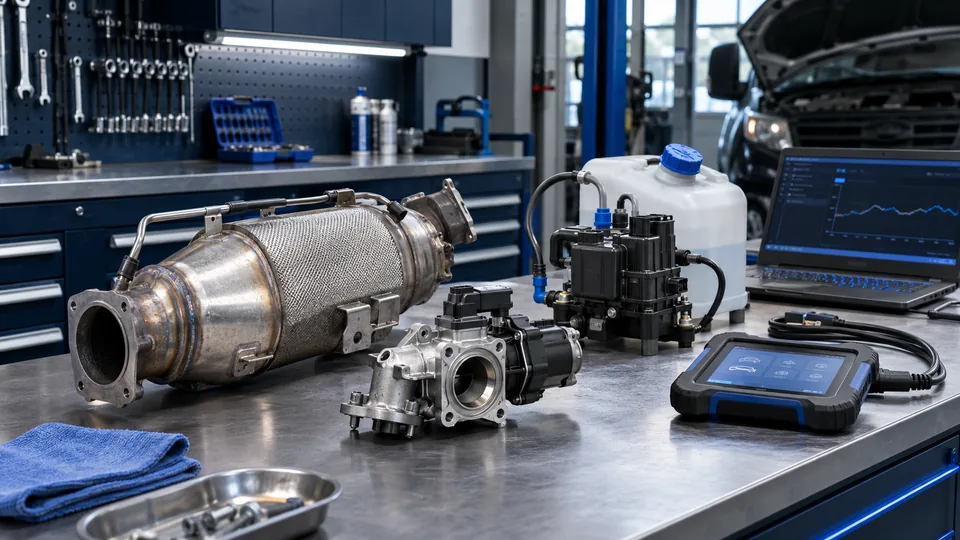
Diagnosis, maintenance and compliant repair assessment for DPF, EGR and AdBlue systems. Work is subject to applicable emissions rules; unlawful disabling of emissions controls is excluded.
DPF, EGR and AdBlue systems form part of a vehicle’s emissions-related technology. Symptoms such as warning messages, recurring fault codes or restricted operation require an assessment of the system as a whole, including relevant sensors, actuators, wiring and operating conditions.
The scope focuses on diagnosis, maintenance needs and technically appropriate, lawful repair options. A proposed intervention must preserve the requirements applicable to the vehicle and its use. Removal or disabling of emissions controls where unlawful is excluded; the service is not advertised as a universal emissions-delete solution.
Performance Calibration
Calibration assessment to align vehicle behaviour with agreed performance objectives while considering reliability, operating limits and applicable requirements.
Performance calibration examines whether vehicle control settings can be aligned with a clearly defined objective, considering the interaction between engine, transmission and other relevant systems. The starting point is a technically suitable vehicle and a realistic understanding of its operating limits.
The work can include baseline observations, review of calibration options and an agreed verification process. Evaluation considers driveability and consistency as well as the requested performance characteristic. Results depend on vehicle condition, hardware, software and test conditions; a particular numerical gain is not assumed.
Electronic Troubleshooting
Investigation of electronic faults through system data, wiring checks and component-level analysis where appropriate.
Electronic troubleshooting investigates faults that may involve several interacting modules or occur only under specific conditions. The process can examine supply voltage, grounds, wiring, communication paths, sensor signals and recorded system behaviour.
Symptoms are reproduced where feasible and potential causes are tested in a logical sequence. The outcome is a documented technical assessment and recommended next action, which may involve wiring repair, component testing, software review or further investigation. Not every intermittent fault can be conclusively reproduced during a single assessment.
Services are provided according to applicable technical and regulatory requirements in the relevant jurisdiction.