
Network Measurement
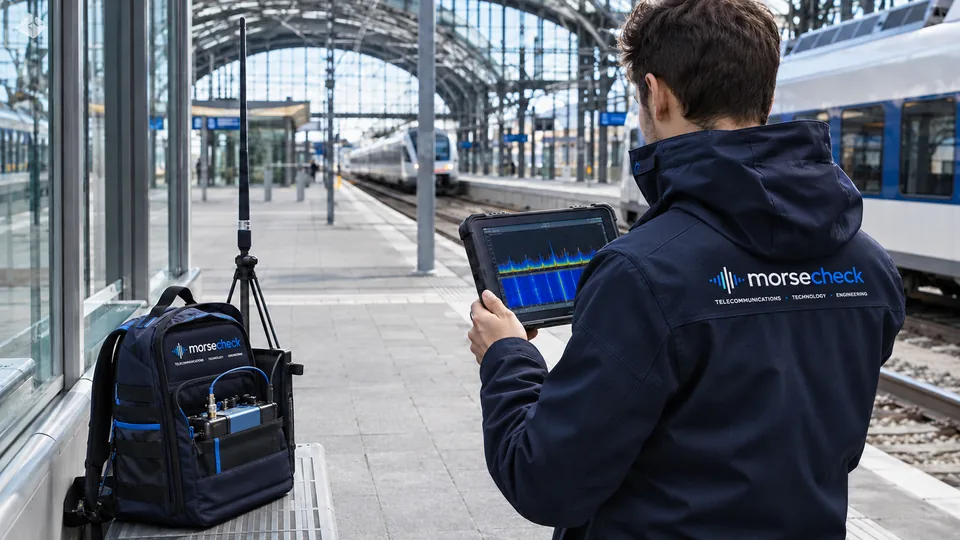
Field measurements assess coverage, signal quality and network behaviour in real operating conditions. Drive tests and walk tests help identify where users experience weak service or interruptions.
A campaign can cover streets, transport routes, buildings or specific problem areas. The measurement plan defines routes, test locations, devices, network technologies and service scenarios, such as voice calls or data sessions, so results can be interpreted in their real operating context.
The analysis brings together signal observations and service performance to distinguish coverage limitations from other possible causes. Findings can be presented through maps, recorded events and a technical report, giving the project team a clear basis for prioritizing further investigation or corrective work.
Network Planning
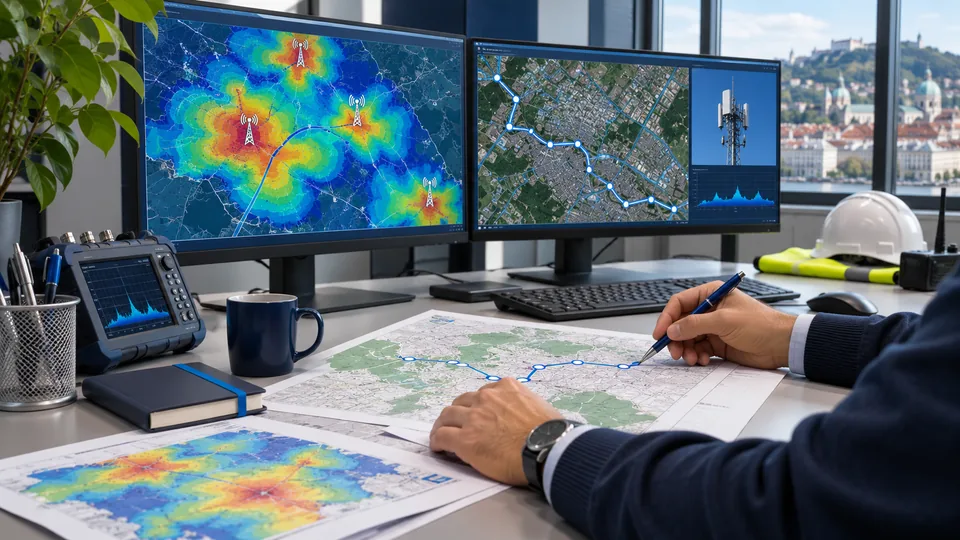
Radio network planning considers coverage objectives, capacity needs, terrain and site constraints to support informed deployment decisions.
Planning translates service requirements into a proposed network structure. Depending on the project, this can involve reviewing candidate sites, antenna characteristics, frequency use, expected traffic and the relationship between indoor and outdoor coverage. Existing infrastructure and deployment constraints are considered alongside the coverage objective.
The work helps compare alternatives before implementation and identify assumptions that need field verification. Planning outputs may include technical recommendations, coverage assessments and priorities for subsequent surveys. Predictions are evaluated against the available inputs and do not replace measurements after deployment.
RF Optimization
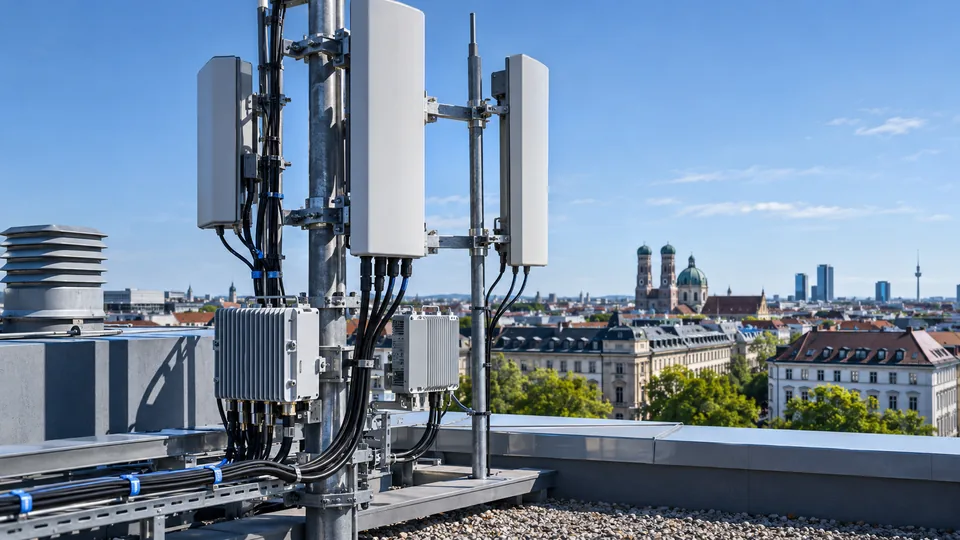
RF optimization analyses measurement results and radio parameters to identify opportunities to improve coverage, interference conditions and service continuity.
The work examines how the radio environment and network configuration influence the user experience. Depending on the agreed access and available data, this may include analysis of interference, antenna settings, serving-cell behaviour, mobility events, traffic distribution and areas with unstable service.
Potential changes are prioritized according to their expected benefit and operational constraints. Recommendations can be followed by a new measurement campaign to compare the situation before and after implementation. Parameter changes are coordinated with the responsible network team rather than applied without authorization.
Benchmarking
Comparable measurement campaigns help assess network performance across operators, technologies or locations using consistent methods and agreed indicators.
A benchmarking project begins by defining what will be compared and how to keep the comparison meaningful. Test devices, routes, timing, service scenarios and measurement indicators are aligned as far as practicable, while limitations and differences in operating conditions are documented.
Results can highlight differences in coverage, service availability, mobility and data performance. The aim is to provide an understandable technical comparison for planning and improvement decisions, rather than a ranking detached from the conditions in which measurements were obtained.
GSM / UMTS / LTE / NR
Measurement and technical analysis across GSM, UMTS, LTE and NR help evaluate radio coverage, service behaviour and interactions between network generations.
GSM, UMTS, LTE and NR represent different generations of mobile radio access. Assessing them together helps understand legacy service dependencies, modern data connectivity and how devices behave when they move between coverage areas or radio technologies. The technologies included depend on what is deployed and available in the project area.
The scope can include signal assessment, voice and data test scenarios, mobility behaviour and investigation of technology-specific incidents. Results are interpreted with the relevant network configuration and test-device capabilities in mind, helping teams identify whether a problem affects one generation or a broader part of the service.
Network Rollout Support
Technical support during network deployment helps coordinate field activities, verify installation readiness and identify issues before acceptance.
Rollout support connects planning with field execution. Activities can include reviewing site information, coordinating measurement work, checking documented configurations, identifying installation inconsistencies and collecting technical evidence needed for the agreed acceptance process.
The purpose is to make technical issues visible early and give the responsible teams a traceable list of findings. Acceptance criteria, responsibilities and required records are agreed for each project; this support does not replace the operator’s own authorization or formal acceptance decisions.
Troubleshooting
Structured investigation combines field observations, measurements and technical analysis to locate the causes of network incidents and service degradation.
An investigation starts with a clear description of the symptom: where it occurs, which services are affected and under what conditions. Relevant measurement logs, configuration information and field observations are examined together to form and test possible explanations.
This approach can help separate radio coverage problems from configuration, equipment, transport or device-related issues. The result is a documented assessment of likely causes, supporting evidence and recommended next actions, including additional tests when the available information does not establish a conclusive cause.
Technical Consulting
Independent technical advice helps define requirements, review measurement findings and select practical next steps for network projects.
Consulting can support a new project, an existing network problem or an independent review of a technical proposal. The work may include defining a measurement strategy, reviewing technical documentation, assessing supplier proposals and translating complex results into practical decisions.
Recommendations are developed around the project’s objectives, available evidence, constraints and resources. The intention is to help the client understand trade-offs and choose a defensible course of action, with assumptions and unresolved questions made explicit rather than hidden behind a generic recommendation.
Equipment Rental
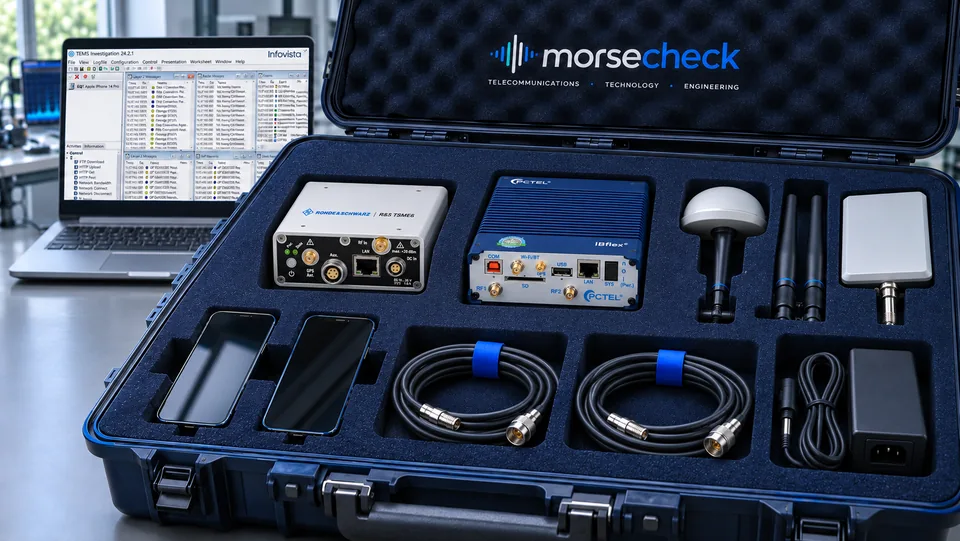
Project-based rental of specialized measurement equipment can support temporary field campaigns. Equipment availability, configuration and rental conditions are confirmed individually.
Rental can be useful when a project needs additional measurement capacity for a defined period without acquiring permanent equipment. The required use case is reviewed to identify suitable devices, accessories, software requirements and any configuration or familiarization needs.
The quotation defines the available equipment, rental period, handover arrangements, permitted use and return conditions. Compatibility and availability are confirmed before a commitment is made. Any technical assistance, calibration information or additional services form part of the individually agreed scope.
Wi-Fi Measurement
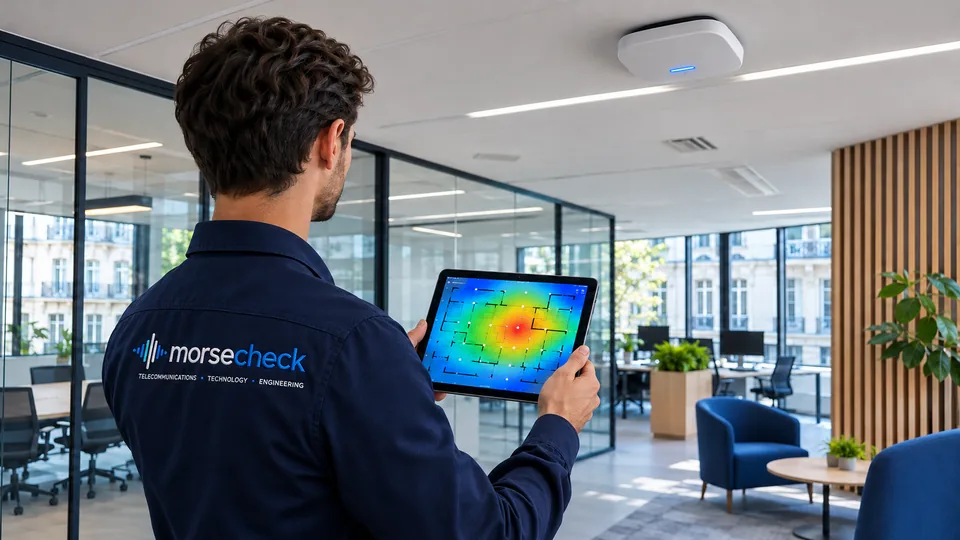
Wi-Fi measurement provides an evidence-based assessment of wireless coverage and connectivity inside the spaces where people and devices need to work.
Wi-Fi measurement evaluates how a wireless local network performs across the spaces where it is used, such as offices, warehouses, commercial premises or public buildings. A survey can combine signal observations with practical connectivity tests to identify weak zones, unstable connections and differences between expected and actual service.
Depending on the project, analysis can cover coverage distribution, signal quality, channel use, interference, access-point overlap, roaming behaviour and throughput. Findings can support decisions about access-point placement, configuration or further investigation, with documented observations and recommendations tailored to the building and its users.